EV road trip planning in 2026 is less about “can I make it?” and more about “how do I make it easy?” After thousands of motorway kilometres in Europe—mixing Ionity, Shell Recharge, Tesla Supercharger, Allego, and Fastned—my biggest wins come from the same basics: pack the right adapters, plan conservative arrival SoC, and sleep at a hotel with charger (usually Type 2 AC) so you start each day full.
This guide turns your research into a practical system: preparation, route mapping, efficiency, charging strategy, and a mid-article “where to stay” section with real EV-charging hotels on Stay Fully Charged.
EV Road Trip Planning 2026: Pre-Departure Checklist
Most charging headaches happen before you leave—missing cables, untested charging speeds, or relying on a single app/network. Fix those once and every trip gets simpler.
Pack the right cables, adapters, and backups
Europe’s day-to-day standard is Type 2 for AC charging and CCS fast charging (CCS Combo 2) for DC. Some regions still have CHAdeMO on legacy stations, and Teslas vary by model year and market.
- Type 2 cable (AC): Essential for hotels, destination chargers, and many public AC posts (typically 7.4–22 kW).
- CCS (DC): Built into most modern European EVs; confirm your car’s maximum DC rate and whether it’s sensitive to cold-gated charging curves.
- CHAdeMO (DC): Still relevant for older Nissan LEAFs and some Japanese imports; check availability on your route.
- Tesla/Supercharger access: If you’ll use Tesla Superchargers as a non-Tesla, confirm your vehicle/app access and bring any required adapter for your car/region.
- Dual-voltage/portable EVSE: Useful for campsites or accommodation with outdoor sockets (where permitted). In Europe you’ll typically use 230V outlets; know your EVSE’s current limits and use approved sockets only.
Real-world tip: I always carry a spare RFID card (from a roaming provider if available) and at least two charging apps logged in and ready, because a single network app can fail at the worst time (coverage, payment auth, maintenance).
Lighten the car and reduce drag (it matters)
Highway efficiency is your budget. Drag is your hidden tax. Removing unnecessary weight helps, but aerodynamic drag is the real range-killer at motorway speeds.
- Avoid roof racks/roof boxes when you can—drag can cut range by up to ~25% depending on speed and weather.
- If you need cargo space, consider more aerodynamic rear solutions (e.g., hitch-mounted boxes) and keep speed steady.
- Check tyre pressure cold and load rating; underinflation increases rolling resistance and heat.
Test your EV before you commit to a long route
Do one “mini road trip” locally so you know your numbers. You’re looking for predictable consumption and predictable charging.
- Highway efficiency test: Drive 30–60 km at your typical motorway speed and note kWh/100 km.
- Charging curve test: Time a DC session from 10–80% and log the average power (kW). This is often more important than peak kW marketing.
- Connector check: Confirm your port (Type 2 / CCS / CHAdeMO) and whether your car supports 11 kW or 22 kW AC.
Install the apps you’ll actually use on the road
For Europe, a good combo is a route brain + a charger truth source + the network apps for payment.
- A Better Routeplanner (ABRP): Best for EV-optimized routes and charging-stop logic.
- PlugShare: Best for recent check-ins, reliability ratings, and “what’s really working today.”
- ChargeHub: Useful trip planning features and filters; good redundancy.
- Tesla navigation: Excellent real-time efficiency-aware routing in Tesla vehicles; can reduce range anxiety significantly.
Also download the big network apps you expect to use: Ionity (high-power corridors), Shell Recharge, Allego, Fastned, and any local operator that dominates your destination country.
EV Road Trip Planning 2026: Route Planning That Actually Works
Planning is about building a route that survives reality: weather, queues, broken stalls, and detours. The goal is to arrive with margin, not drama.
Plan with 60% of the stated range (then adjust)
Range ratings are a lab baseline. On European motorways, you’ll often do better planning with a conservative buffer—especially in cold, rain, headwinds, or mountains.
- Start by assuming ~60% of stated range as your “safe planning range.”
- Increase buffer in winter, strong wind, heavy rain, or sustained 120–130 km/h cruising.
- Prefer flatter routes when time is similar; climbs can spike consumption and limit regen benefits on the way down.
Use ABRP for structure, then verify chargers with PlugShare
ABRP is great at telling you where to stop. PlugShare is great at telling you whether the stop is a good idea today.
- Build your route in ABRP with your exact EV model, desired arrival SoC (e.g., 10–15%), and preferred networks.
- Open each planned charging stop in PlugShare and check recent check-ins, broken-stall reports, and whether the site is busy at your ETA.
- Add at least one backup charger near each stop (preferably on a different network).
Prioritise charger sites with amenities (time feels faster)
A 20–30 minute stop is easy when it’s paired with something you’d do anyway.
- Look for chargers near supermarkets, restrooms, coffee, and quick meals.
- Choose hubs with multiple stalls to reduce queue risk.
- When possible, pick locations with both HPC DC and nearby Type 2 AC as a fallback.
Europe network density: where it’s easiest (and where to plan harder)
From my EV trips, the “easy mode” countries are those with dense motorway HPC coverage and lots of destination AC. In 2026, you’ll typically find strong coverage across:
- Netherlands, parts of Germany/Belgium, and the Nordics (dense AC + fast DC).
- Austria and Switzerland (good corridors; mountains still require buffer planning).
Planning often needs more redundancy in parts of the Mediterranean and along some Adriatic corridors where spacing, maintenance, and seasonal congestion can be tougher. The fix is simple: build in backups and avoid arriving too low.
EV Road Trip Efficiency Tips: More Range, Fewer Stops
Small efficiency gains compound all day. On motorways, a calm right foot and smart climate strategy often save more time than hunting for the “perfect” charger.
Drive steady and let the car coast (regen is not free)
Regenerative braking is great, but avoiding unnecessary acceleration/braking is better. The most efficient kilometres are the ones you don’t “buy twice.”
- Use adaptive cruise where it’s smooth; avoid “accordion driving.”
- Accelerate gently up to speed and hold it; big surges cost a lot.
- Use eco mode if it reduces HVAC or throttle sensitivity without making you unsafe in traffic.
Tyres, temperature, and speed: your big three
- Tyre pressure: Set to the manufacturer’s recommended values for load and motorway driving.
- Cold weather: Expect higher consumption and slower charging until the battery is warm.
- Speed: Above ~110 km/h, aero drag rises quickly; dropping 10–15 km/h can meaningfully reduce kWh/100 km.
Minimise climate-control drain (without suffering)
Cabin comfort can be a large load in winter. The trick is to use grid power whenever possible.
- Precondition while plugged in at a hotel or during a charging stop so the battery and cabin start warm/cool.
- Use seat heaters instead of blasting cabin heat; in cold conditions this can significantly reduce HVAC draw (and may save up to ~41% versus heavy cabin heating in some scenarios).
- If you can, time winter departures later in the morning for slightly warmer ambient temps and better efficiency.
EV Charging Strategy 2026: Faster Stops, Less Stress
Charging is a logistics game: arrive with a low-but-safe state of charge, charge in the fastest part of the curve, then leave. Most EVs charge fastest at lower SoC and taper as they fill.
Think in kW and minutes, not “percent”
A charger’s label (e.g., 150 kW, 300 kW) is only half the story. Your EV’s peak and sustained rates—and the battery temperature—decide your real speed.
- DC fast charging (Level 3): Most road-trip stops are best optimized from ~10% to ~80%.
- AC destination charging (Type 2): Ideal overnight. Even 7.4–11 kW can restore a large chunk of range while you sleep.
- If your car supports it, 22 kW Type 2 can be a big quality-of-life upgrade for city stays and shorter stopovers.
Plan charging breaks like normal breaks
On long days, I plan a DC stop roughly every 130–350 km depending on consumption and charger spacing. Treat those stops as meals, walks, viewpoints, or errands—not “wasted time.”
- Target multi-stall hubs (Ionity sites are often good examples on main corridors).
- Arrive with margin (e.g., 10–15% SoC) so a queue or broken stall doesn’t force a slow detour.
- Unplug promptly when done—especially at busy locations and when using Tesla Superchargers as a non-Tesla.
Payments and activation: don’t discover issues at the charger
- Create accounts and add payment methods to network apps before departure (some stations still don’t accept contactless cards reliably).
- Carry at least one roaming option if available in your region.
- Screenshot or save support numbers for key networks (Ionity, Shell Recharge, Allego, Fastned, Tesla).
Always have a Plan B (and a Plan C)
Range anxiety is usually “charger anxiety.” You fix it with redundancy.
- For every planned DC charger, identify a backup within ~10–20 km.
- Filter by connector type: CCS for most cars, CHAdeMO if needed, and Type 2 for AC fallback.
- Use PlugShare ratings and recent check-ins to avoid notoriously unreliable sites.
Where to Stay with EV Charging (Hotels with Charger)
Booking a hotel with charger is the biggest quality-of-life upgrade for EV travel. A dependable Type 2 overnight top-up means fewer DC stops, more flexibility in cities, and an easier morning departure.
Below are verified Stay Fully Charged options with on-site charging—ideal for city breaks and road-trip stopovers.
Barcelona: reliable overnight Type 2 + multi-standard options
- Hotel El Palace Barcelona (5★, 9.4/10): A standout for EV travellers with extensive charging options including Type 2, CCS, CHAdeMO, and Tesla, up to 22 kW.

- Hotel Barcelona Catedral 4 Sup (4★, 9.3/10): Central stay with broad connector support (Type 2, CCS, CHAdeMO, Tesla) and up to 22 kW AC—great for overnight charging while you explore on foot.

Browse more options on our EV-friendly hotels in Barcelona page, or expand to hotels with EV charging in Spain for road trips toward the Costa Brava or inland routes.
Amsterdam: dense charging city + strong hotel AC speeds
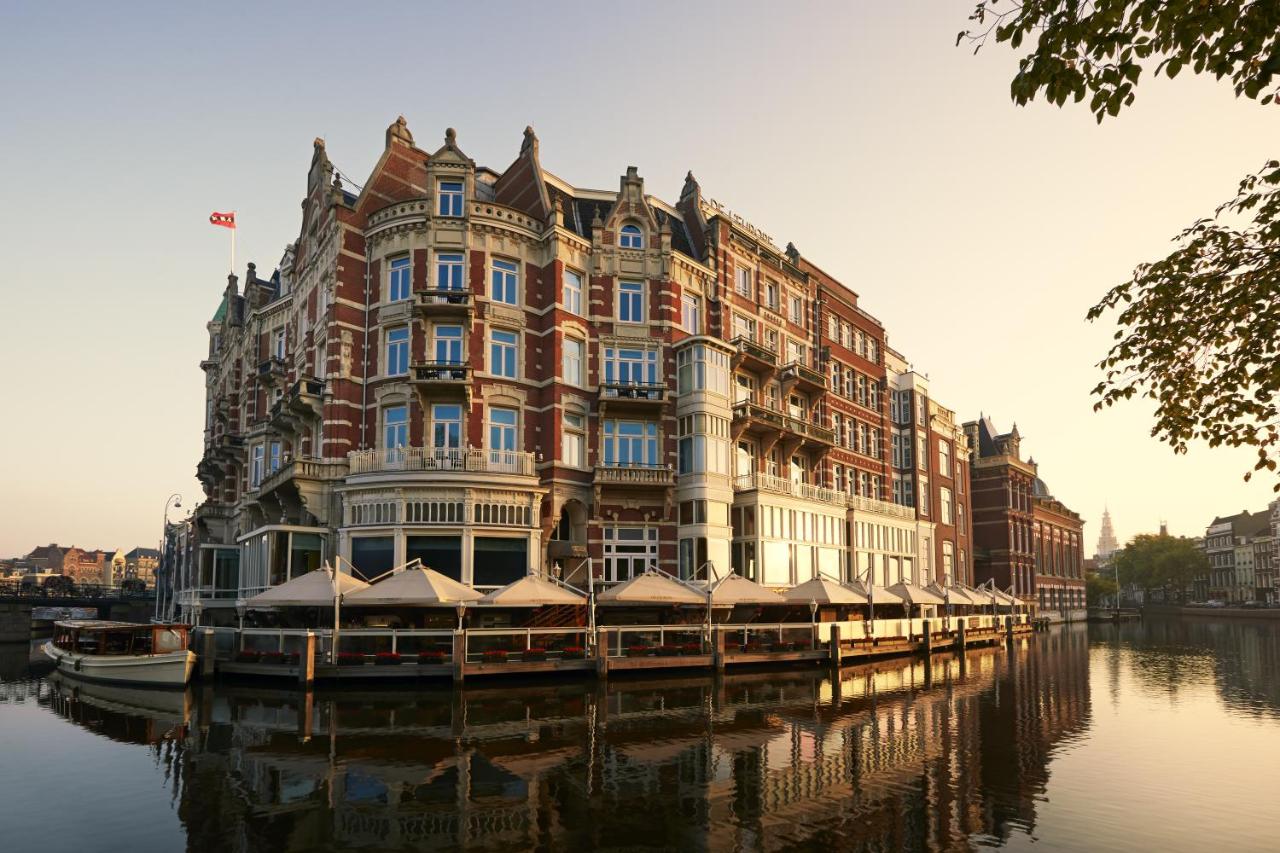
- De L’Europe Amsterdam – The Leading Hotels of the World (5★, 9.2/10): Premium central option with Type 2 connectors up to 22 kW, ideal for predictable overnight replenishment.
- Anantara Grand Hotel Krasnapolsky Amsterdam (5★, 9/10): Exceptional capacity with many Type 2 connectors and up to 38.4 kW—a strong pick when you want fast AC charging without hunting for public posts.

For more city options, see EV-friendly hotels in Amsterdam and plan a wider itinerary with hotels with EV charging in Netherlands as your hub for Benelux driving.
Overcoming Range Anxiety: A Simple, Repeatable System
In practice, range anxiety fades when you stop trying to “stretch” and start driving to a plan. Modern routing, conservative buffers, and overnight charging remove the uncertainty.
Use an arrival buffer and protect it
- Set an arrival target of 10–15% SoC at each DC stop.
- If consumption rises (wind/rain), slow down early rather than “hoping it improves.”
- Skip risky chargers with poor reliability reports—even if they’re perfectly placed.
Precondition and charge in the efficient window
- Precondition battery/cabin while plugged in whenever possible.
- On DC fast chargers, aim for 10–80% for the best time efficiency.
- If you need extra buffer for a sparse stretch, add a little more—but know that 85–100% can be slow on many EVs.
Leverage your vehicle’s navigation (especially Tesla)
Some OEM systems, particularly Tesla navigation, continuously adjust based on real-time consumption and can reroute to a better charger automatically. Even if you use ABRP for planning, the car’s live predictions are valuable for on-the-fly decisions.
Sample EV Road Trip Planning Workflow (Copy/Paste)
If you want a quick method you can repeat for any European route, use this checklist.
The night before
- Charge at your hotel (Type 2) or a nearby AC post; confirm it’s working.
- Set tyre pressure and remove unnecessary cargo/drag.
- Load the route in ABRP and save backups in PlugShare.
On the driving day
- Start with preconditioned cabin and battery (plugged in if possible).
- Drive steady; adjust speed early if consumption rises.
- Stop at DC hubs that match your connector: CCS fast charging for most, CHAdeMO where needed.
- Charge to ~80%, unplug, and move on.
On arrival
- Prioritise a hotel with charger so tomorrow begins full.
- If hotel AC is busy, use a nearby public Type 2 post as a backup.
EV Road Trip Planning 2026: Key Takeaways
- Pack the correct kit: Type 2 cable, network access, and the right adapters for your vehicle and networks you’ll use.
- Route with ABRP, validate with PlugShare, and always add backups.
- Drive steady, manage HVAC with preconditioning, and keep tyres properly inflated.
- Optimise charging: DC 10–80% for speed; Type 2 overnight at a hotel with charger for convenience.
- In Europe, network density is strongest in places like the Netherlands and the Nordics; plan extra redundancy in sparser regions.
Where to Stay in Barcelona
Hand-picked hotels with EV charging facilities for electric vehicle travelers
Browse all hotelsHotel El Palace Barcelona
- 47 connectors
- Up to 22 kW
- Type 2
Free cancellation on most rooms
Hotel Barcelona Catedral 4 Sup
- 33 connectors
- Up to 22 kW
- Type 2
Free cancellation on most rooms
De L’Europe Amsterdam – The Leading Hotels of the World
- 26 connectors
- Up to 22 kW
- Type 2
Free cancellation on most rooms
Looking for more options in Barcelona?
Browse moreFrequently Asked Questions
Plan DC fast charging stops around the fastest part of your curve—typically 10–80%—then leave promptly. Pair each stop with a meal or rest break, and always identify a backup charger nearby. Overnight, use a Type 2 hotel charger to start the next day full.
Most European AC charging uses Type 2, and most DC fast chargers use CCS Combo 2. CHAdeMO still exists but is mainly relevant for older models like the Nissan LEAF. Confirm your car’s inlet type and filter chargers by connector in PlugShare or ABRP.
Use a conservative buffer by targeting 10–15% arrival state of charge at each charger, and plan using about 60% of rated range in cold, wind, rain, or hills. Precondition while plugged in, drive steady at moderate speeds, and keep a Plan B charger for every stop.
Book a hotel with charger whenever possible. A Type 2 overnight top-up (often 7.4–22 kW) reduces the number of DC stops you need and makes mornings easier. Public DC is great for transit, but hotel charging is the most reliable way to reset daily range.
Use ABRP to build an EV-optimised route with charging stops and arrival SoC targets. Verify each stop in PlugShare using recent check-ins and reliability ratings. Keep network apps like Ionity, Shell Recharge, Allego, Fastned, and Tesla for payment and activation redundancy.