Europe’s best summer EV road trips (and why they’re easy now)
Electric road trips in Europe have moved from “possible with planning” to genuinely enjoyable. Across many countries, charging networks are dense, route planners are smarter, and more hotels are installing on-site charge points—meaning you can spend less time worrying about range and more time enjoying long summer days on the road.
This article brings together some of Europe’s most rewarding EV road trip routes for summer travel, including classic drives in the UK, fjord-and-mountain scenery in Norway, historic French routes, Germany’s forested high roads, and the Netherlands’ famously charger-rich cities. You’ll also find practical charging tips (apps, costs, and reliability) and a dedicated section on EV-friendly places to stay.
Quick charging reality check: what to expect on a European EV road trip
Charging in Europe varies by country, but the overall trend is clear: networks are expanding quickly and long-distance driving is increasingly straightforward. Several countries consistently rank highly for charge point density—including the Netherlands, Switzerland, Sweden, Denmark, and Austria—while France and Germany continue to add hundreds of new charge points every month.
- Best overall coverage: France and Switzerland are often praised for charger availability and usability on multi-country drives.
- Generally strong and improving: Germany and France (rapid expansion), plus the Nordics (mature EV ecosystems).
- Watch-outs: Some regions can still be less reliable, and real-world reports have noted lower reliability in parts of Spain compared with central Europe.
Cost-wise, a recent 3,500 km multi-country EV trip reported average charging costs of about €0.05 per kilometre. Your exact number will depend on your car’s efficiency, local electricity pricing, and whether you use subscription-based charging passes.
Essential charging apps for cross-border travel
For stress-free routing, it helps to use one or two primary charging apps plus your car’s built-in navigation:
- Chargemap for broad European coverage and user reviews.
- PlugShare for crowd-sourced reliability updates and photos.
- IONITY for locating high-power chargers on major corridors where available.
Top EV road trip routes for summer in Europe
Below are some of the most compelling European routes for EV drivers—chosen for scenery, ease of charging, and summer travel appeal.
United Kingdom: The Great West Way (Bristol to London)
The Great West Way connects Bristol and London over roughly 150 miles, passing through postcard-pretty stretches of the English countryside. For many EVs, that distance can be comfortable on a single full charge—especially in summer when mild temperatures can improve efficiency.
- Highlights: Stonehenge, historic towns and villages in the Cotswolds, Hampton Court Palace, and plenty of standout dining.
- Why it works for EVs: The region is densely populated, which generally means abundant public charging options and easier detours if a station is busy.
- Driving feel: A relaxed, culture-rich drive that’s great for a long weekend or as the first leg of a longer UK itinerary.
Tip: If you’re heading into the capital, it can be more convenient to arrive with enough charge to reach your hotel and then use overnight AC charging—rather than relying on city-centre fast charging at peak times.
Norway: Bergen to Ålesund (fjords, mountains, waterfalls)
Norway is widely considered Europe’s premier EV destination, with EV adoption at remarkable levels—97% of new cars registered being all-electric as of April 2025. That kind of market maturity tends to correlate with excellent charging infrastructure and EV-friendly services.
Norway’s 18 officially recognised scenic routes are practically built for summer road trips, showcasing fjords, mountains, and waterfalls. The Bergen to Ålesund drive stands out as a classic example of breathtaking scenery combined with a charging ecosystem that’s used to high EV volumes.
- Highlights: Dramatic coastal views, ferry crossings, high mountain roads, and iconic fjord scenery.
- Why it works for EVs: High EV penetration means charging is a mainstream expectation, not an exception.
- Planning note: Build in time buffers for scenic stops (and charging) because you’ll want to stop often.
France: Route Napoléon (Golfe Juan to Grenoble)
The Route Napoléon is a 200-mile drive from Golfe Juan on the Mediterranean coast to Grenoble in the Alps, tracing Napoleon’s historic 1815 journey after his return from exile. It’s one of those routes where you feel the landscape change in real time—from sunlit coastal air to alpine terrain.
- Highlights: Varied scenery, charming towns, and an easy “storyline” to your road trip thanks to the historic theme.
- Charging: France offers some of Europe’s best charging infrastructure with high-speed options along most of the route, though one stretch can be thinner between Chateau-Arnoux-Saint-Auban and Grasse.
- EV strategy: Start that thinner section with a healthier buffer (for example, arriving with 30–40% rather than 10–15%), especially during busy summer weekends.
Germany: Black Forest (Schwarzwald) via the B500 High Road
Germany’s Black Forest is a summer favourite: deep pine forests, sunlit valleys, and curving mountain roads that reward smooth, quiet EV driving. The classic pairing is Stuttgart to Baden-Baden, with the famed B500 High Road as the scenic centrepiece.
- Distance: Stuttgart to Baden-Baden is under 100 miles; the B500 High Road itself is about 37 miles—short enough to keep range anxiety low.
- Highlights: Hairpin bends, panoramic viewpoints, forest hikes, and spa-town energy at the end.
- Charging note: Charging directly on the B500 can be limited; plan to top up at well-powered stations at either end and in Freudenstadt.
Netherlands: Amsterdam to Rotterdam (easy miles, dense chargers)
The Netherlands is famous among EV drivers for one simple reason: it has more public chargers than anywhere else in Europe. Combine that with flat terrain (great for efficiency), and you get one of the most confidence-inspiring countries for an EV road trip.
The Amsterdam to Rotterdam route is ideal if you want a city-to-city drive that’s short on stress and long on fun—canals, museums, design districts, and beach detours if you feel like extending the trip.
- Highlights: Urban culture, modern architecture, and easy add-ons like The Hague or coastal towns.
- Why it works for EVs: Excellent charger density plus efficient driving conditions.
More scenic alternatives to add to your shortlist
If you’re building a longer itinerary, these destinations are often recommended for their scenery and summer appeal:
- Switzerland: Bernese Oberland
- Portugal: Douro Valley
- Italy: Chianti Wine Route
- Netherlands: Afsluitdijk Causeway
How to plan charging stops without losing holiday time
A great EV road trip rhythm is about aligning charging with the moments you’d stop anyway: breakfast, scenic viewpoints, a museum visit, or a longer lunch. In summer, you can also take advantage of longer daylight hours to be flexible with timing.
- Prioritise overnight charging: A hotel with on-site chargers can save you a dedicated charging stop the next day.
- Mix charging speeds: Use fast charging for transit corridors and AC charging (like 11–22kW) for destination top-ups.
- Check recent reviews: Apps like PlugShare can reveal whether a charger is frequently blocked, broken, or hard to access.
- Keep a buffer: In rural or mountainous stretches, plan a little extra state-of-charge to cover detours or busy stations.
Where to Stay
If you’re planning city breaks at either end of a road trip—or you simply want a comfortable base with dependable on-site charging—choosing the right hotel can remove a huge amount of friction. Below are EV-friendly stays in London and Amsterdam with dedicated charging connectors on site.
London: luxury stays with on-site EV charging
If your Great West Way adventure finishes in the capital, staying somewhere that can charge your car while you sleep is a major win—especially if you’re arriving during peak hours.
One Aldwych is a 5-star option (9.4/10) with 12 connectors up to 22kW, making it well suited to overnight top-ups or a longer destination charge while you explore central London.

Royal Lancaster London is another 5-star pick (9.2/10) offering 12 connectors up to 22kW. It’s a strong choice if you want a reliable charging setup plus the convenience of recharging before heading out for the next leg of your trip.

Amsterdam: high connector counts for easy arrivals
Amsterdam is one of Europe’s easiest cities for EV drivers, and hotels with plentiful connectors make it even simpler—especially if you’re arriving after a day of exploring Dutch cities or the coast.
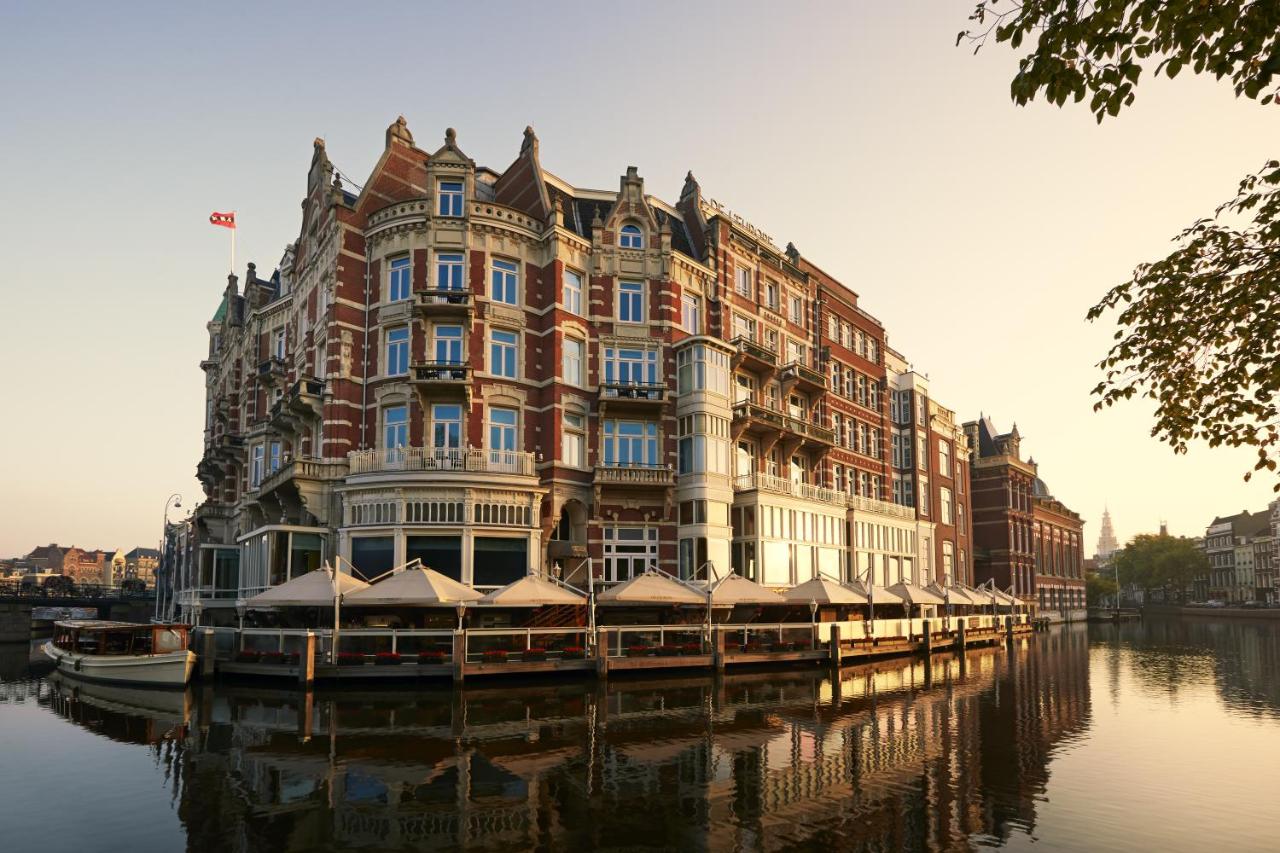
De L’Europe Amsterdam – The Leading Hotels of the World (5-star, 9.2/10) features an impressive 26 connectors up to 22kW. That connector volume can be particularly helpful in busy summer periods when multiple guests may need to charge at once.
Anantara Grand Hotel Krasnapolsky Amsterdam (5-star, 9/10) offers an exceptionally high number of on-site charging options, with 70 connectors up to 38.4kW. If you value maximum availability (and potentially faster destination charging), it’s a practical base for exploring Amsterdam and beyond.

EV road trip tips for summer: make the drive smoother
1) Start early, charge early
In peak summer travel weeks, popular fast chargers can get busy mid-day. If you charge earlier in the morning (or rely on overnight hotel charging), you’ll often skip queues and get better charging speeds on a cooler battery.
2) Plan around “thin” stretches
Most of the featured routes have strong coverage, but any road trip has segments where chargers are fewer or less convenient. A known example is the Route Napoléon stretch between Chateau-Arnoux-Saint-Auban and Grasse—so treat it as a cue to top up a little earlier rather than later.
3) Keep your charging flexible across networks
Different operators and pricing models can make ad-hoc charging confusing across borders. Keeping accounts (or payment options) in two major apps—plus a backup card—can save time if one network has a temporary issue.
4) Use the terrain to your advantage
Flat countries like the Netherlands can deliver excellent efficiency, while mountainous areas (Norway, the Alps, the Black Forest) will use more energy on climbs—but often give it back through regenerative braking on descents. Your average consumption may be better than expected if you drive smoothly.
Suggested itineraries (mix-and-match)
Long weekend: Great West Way + London recharge
- Day 1: Bristol to Cotswolds stops, easy top-up en route if needed
- Day 2: Stonehenge + countryside detours
- Day 3: Arrive London, park and charge at your hotel overnight
One week: Netherlands city hop with zero range stress
- Base: Amsterdam
- Drive days: Amsterdam–Rotterdam and optional coastal or Afsluitdijk add-ons
- Charging style: Mostly destination charging + short top-ups as needed
Epic scenery: Norway scenic route focus
- Route: Bergen to Ålesund with multiple scenic stops
- Best for: Drivers who want “the road trip is the holiday” energy
- Charging style: Regular top-ups timed with viewpoints and ferry breaks
Final checklist before you set off
- Confirm your charging cables (Type 2 is common for AC; carry what your car requires)
- Install at least two charging apps and add a payment method
- Save a few backup chargers near your key stops
- Choose at least one hotel stay with on-site EV charging for overnight top-ups
- Leave a buffer for scenic stops—because you will stop more than you think
With the right routes and a hotel that can recharge your car while you sleep, Europe becomes an ideal summer playground for EV drivers: fjords and forests, coastal climbs and canal cities—all without the constant hunt for a plug.
Where to Stay in London
Hand-picked hotels with EV charging facilities for electric vehicle travelers
Browse all hotelsOne Aldwych
- 12 connectors
- Up to 22kW
Free cancellation on most rooms
De L’Europe Amsterdam – The Leading Hotels of the World
- 26 connectors
- Up to 22kW
Free cancellation on most rooms
Royal Lancaster London
- 12 connectors
- Up to 22kW
Free cancellation on most rooms
Looking for more options in London?
Browse moreFrequently Asked Questions
Check the hotel’s listed EV charging details (number of connectors and kW), then confirm access rules before arrival—some hotels require reserving a bay, validating parking, or using a specific cable type.
Most European hotels that offer AC charging provide Type 2 connectors. If your car needs an adapter, bring it, and consider carrying your own Type 2 cable if the property uses socket-based points rather than tethered connectors.
Yes. Up to 22kW AC is ideal for destination charging: over an overnight stay it can add a substantial amount of range. Actual speed depends on your car’s onboard AC charger (many models take 7–11kW even if the station supports 22kW).
Late June to early September offers long daylight hours and generally efficient EV conditions. For fewer crowds and easier charging access, consider late June or early September rather than peak holiday weeks.
Arrive with time to check in and ask about the charging bay location, access procedure, and whether you need to move the car after charging. In busy periods, hotels may have designated time windows to ensure fair access for multiple EV guests.